Booked here
Da Nang train day
Train, citadel, pagoda, tomb
- Starts at$49
- Length12.5 hours
- Reviews2,952
Guides
Language
Currency
See availabilityfrom $49 · no cancel feeMake-your-mind-up tool
The quick take
The Hue Imperial City is worth visiting for history, a visit takes around 2 hours and some structures are ruins or only partly restored.
Verdict essentials
Two questions, one answer
Say where you are based and what you want, and the day that fits appears with its starting price.
Best match for you
from $49
A day trip of 12.5 hours with the train over the Hai Van Pass, the citadel, Thien Mu and the Khai Dinh tomb.
Best match for you
from $15
A day of 8 to 11 hours from Hoi An, with the citadel for 2 hours and a royal tomb.
Best match for you
from $2
A guided walk of 2.5 hours through the Imperial City, from the ticket office.
Best match for you
from $14
A half-day or full-day city tour of 4 to 8 hours with the Imperial City, Thien Mu and a tomb.
What a visit to the citadel gives you, how large it is, what is original and what is rebuilt, how the heat plays, and who is better off with another stop.
Editorial team, hueimperialcitytour.click · Updated November 16, 2026 · A 6 min read
Basics
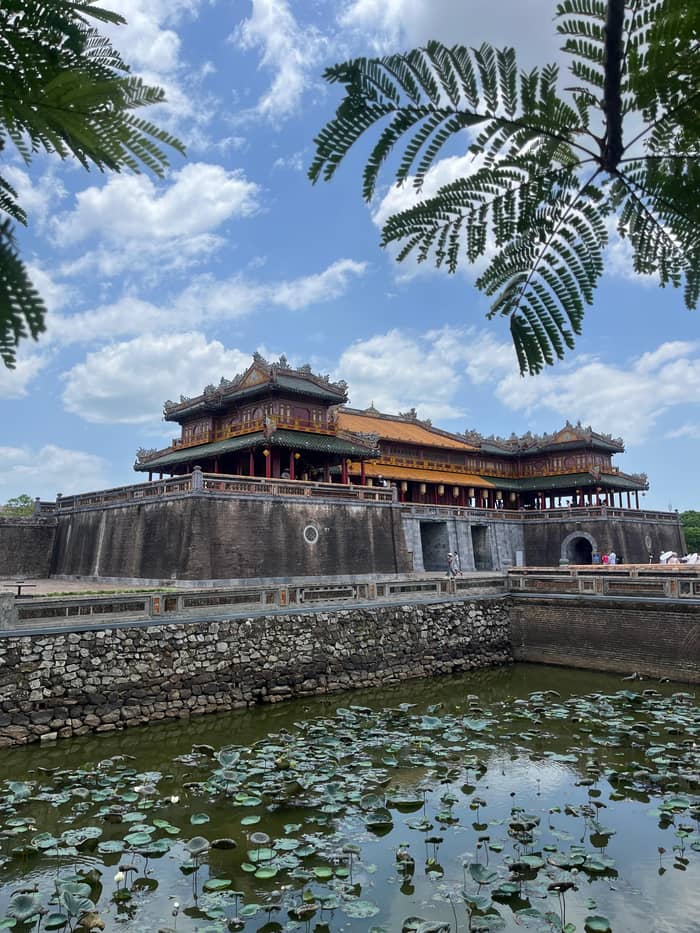
The case for the Hue Imperial City is simple. This was the political, cultural and religious centre of the Nguyen Dynasty, the last royal dynasty of Vietnamese history, from 1802 to 1945, according to UNESCO.1 The national tourism authority reports that 13 kings reigned from Hue for 143 years.6 You are walking through the place where that rule was staged.
The authority says exploring the royal courtrooms, administrative buildings and religious structures of the Imperial City takes around 2 hours.2 That is a real visit rather than a photo stop, and it fits into a morning or an afternoon. UNESCO lists the Imperial City and the Forbidden Purple City among the parts of the Hue Citadel.7
What you leave with is a sense of scale and ceremony: gates, courtyards and halls built for audiences with an emperor. The authority describes the palaces, pavilions and theatres of the Hue Citadel as the core of what survives of the 143-year reign.8 If you want to understand why Hue matters to Vietnamese history, 2 hours inside the walls is the shortest honest answer.
Side by side
| Stop | What it is | Scale | Time |
|---|---|---|---|
| Hue Imperial City | The Nguyen capital1 | 315.47 ha property3 | Around 2 hours2 |
| Hoi An old town | An old trading port11 | 30 hectares preserved12 | Your pace |
| Ba Na Hills | A themed hill complex13 | About 30 km from Da Nang13 | Your own day |
| Our train day | Hue by rail from Da Nang | Citadel, pagoda, tomb | 12.5 hours |
Figures as the official sources and the listing state them; the three stops are different kinds of day, so the table compares scale and time, not quality.3
UNESCO gives a number for the whole listed complex. The Complex of Hue Monuments, inscribed in 1993 under criterion (iv), has a property of 315.47 ha and a buffer zone of 71.93 ha.3 That figure covers the complex as a whole and not the walled Imperial City alone, so do not read it as the area of the walls.
The Hue Imperial City size in practice is measured in time. The authority's estimate of around 2 hours for the royal courtrooms, administrative buildings and religious structures is the figure that matters for planning.2 The local-guide walk takes about 2.5 hours and runs through named stops, from the Ngo Mon Gate at the start to the Duyet Thi Duong Royal Theater at the end.
An electric car service, run by the centre, moves visitors around the citadel if the grounds feel too big.10 If distances worry you, the car is the answer. If you can walk, the 2 hours are well spent on foot, and a guide can shorten the path between the highlights, which matters most on the hot days of the year.
Ratings
Average ratings as each listing shows them, out of 5; a labelled sample of tours, not a rating of the monuments.
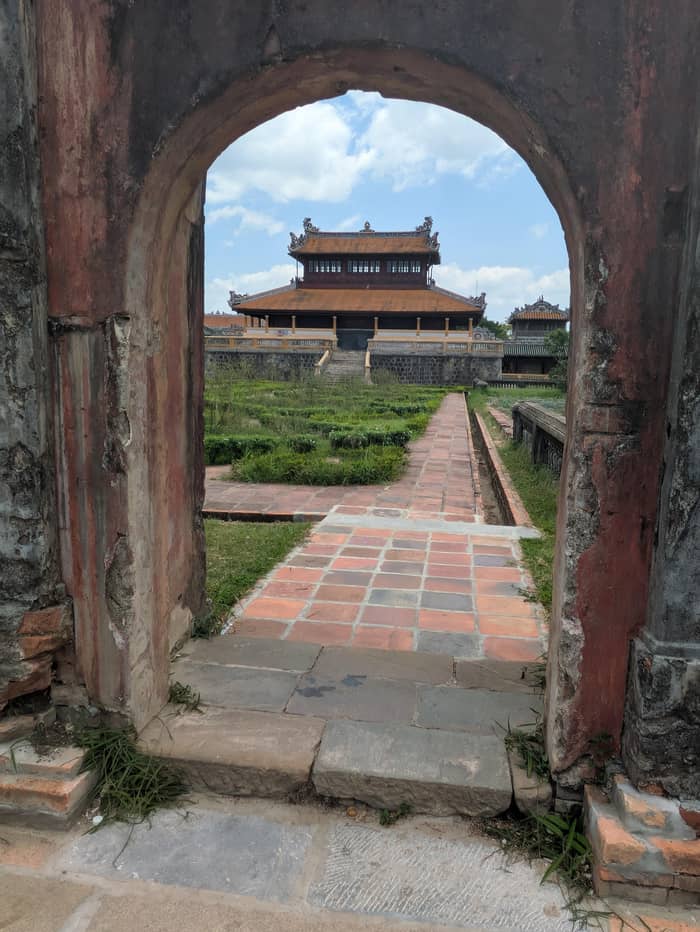
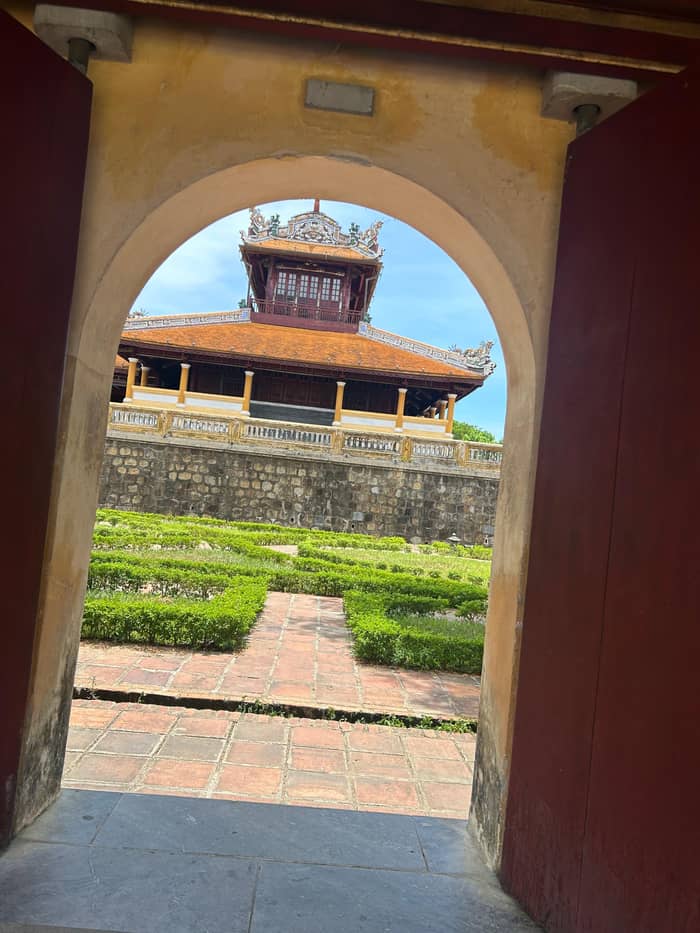
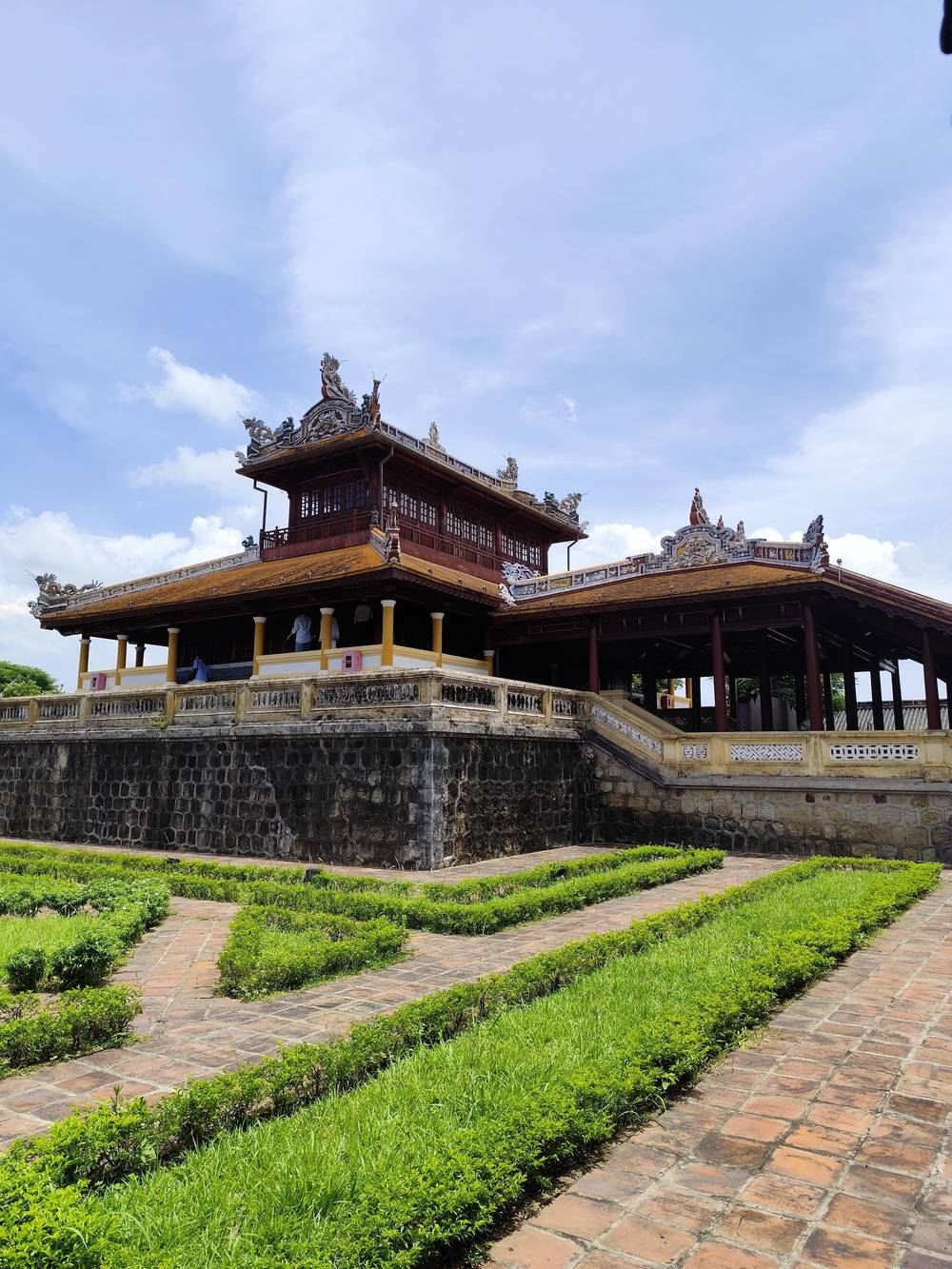
Be ready for an uneven site. UNESCO says the complex has suffered the effects of 3 wars, as well as development and expanding settlement, and that it remains sufficiently well preserved as a whole, or recorded, for its integrity to be maintained.15 It says some of the structures are now in ruins and that most significant monuments have been partially restored.4
UNESCO adds that the restoration used traditional techniques and materials to international conservation standards.4 The centre that manages the complex, placed directly under the provincial committee, has more than 700 staff who handle research, visitor management and the setting around the walls.16 That is a working restoration programme rather than a finished museum, so what you see on a given day depends on which areas are open and which are under repair.
For the visitor this means two experiences. Some halls are bright and furnished, and some areas are lawns with a plan on a board. If you want every building roofed and complete, adjust your expectations; if you enjoy the sense of a vast place being recovered, the Imperial City rewards patience. A guide helps you tell which is which, and the centre's price page lists guides at the monuments for that purpose.17
Three ways to find out
Booked here
Train, citadel, pagoda, tomb
City tour
Half or full day by car
On foot
2.5 hours on foot
The national tourism authority gives February to April as the best time for Hue, with mild, dry weather best for the Imperial City, and warns of heavy rain and typhoons in the weeks from September to November.14 Its seasonal summary has Hue cool, cloudy and wet from September through February, then warm and sunny from March to August.20
Plan around the extremes. In its figures, Hue cools to 15 degrees at the start of the year, with some mist in January, and reaches highs of 35 degrees in July.5 It also says Hue has a late rainy season with occasional flooding from September to November.18 The open courtyards have limited shade, as one walking-tour listing warns.
In practice, go early in the hot months and carry a rain layer in the wet ones. A visit between February and April gives the best chance of a comfortable morning on the stone paving. If your dates fall in the wet season, a night in the city gives you a spare half day to swap the citadel for the tombs when the weather turns.
Price your group
Pick your group size to compare four fares for a Hue visit.
Compare 4 side by side
Pick your group size to compare four fares for a Hue visit.
≈
View≈
View≈
View≈
ViewAll amounts are from-prices on GetYourGuide, converted at the ECB reference rate. Exact prices are shown at booking.
A worthwhile day
Morning
Count on roughly 2 hours for the Imperial City.2
Midday
Our train day lists a lunch break of 35 minutes.
Afternoon
The listing gives the pagoda 30 minutes.
Late afternoon
The Khai Dinh tomb gets 45 minutes on our tour.
Dusk
The gate is lit up as the sky fades.9
On a central-coast trip Hue competes with other stops for your days. Hoi An is a trading port from another age: 30 hectares of its ancient town are kept as a UNESCO site, and Chinese, Japanese and European merchants settled there from the 15th to the 19th century.12 It was a booming trading port of Southeast Asia in the 16th century.11
Sun World Ba Na Hills is a different kind of day: a European-themed recreational complex in the Truong Son Mountains about 30 km from Da Nang.13 Hue is neither a theme park nor a trading town; it is the seat of the last dynasty, and it suits readers with an appetite for history.1 Where Hoi An rewards slow wandering and Ba Na Hills rewards a big day out, the Imperial City rewards a guide, a hat and a clear 2 hours.2
If you have only a day for just one of them, choose by what you want to feel. Hoi An gives lantern streets, Ba Na Hills gives amusements, and Hue gives walls, halls and tombs. The decision page on this site compares ways to fit Hue in from Da Nang or Hoi An, and the Da Nang page lists the hours.
Video
Phil and H on YouTube · The video only starts loading on your tap.
Established as the capital of unified Vietnam in 1802 CE, Hue was not only the political but also the cultural and religious centre under the Nguyen Dynasty
If you go
Hue Imperial City reviews are best read through the tours that visit it. Our train day averages 4.9 over 2,952 reviews, with 4.9 for the guide, 4.9 for transport and 4.8 for value. In a labelled sample, the 10 newest English reviews were all rated 5 and every one of them praises the guide; 6 mention the train ride, 6 mention lunch and 4 mention the history the guide shared.
The city tours tell a similar story at different scales. The half-day or full-day city tour has 1,456 reviews averaging 4.6, the citadel walk 584 reviews averaging 4.8 and the local-guide walk 317 reviews averaging 4.8. These are ratings of the tours and guides, not of the monuments themselves, so read them as a sign of how well the day works.
Who should skip it? Travelers who dislike heat and crowds on stone courtyards will find July hard, with highs of 35 degrees.5 Families with children under 5 should note that our train day does not recommend that age. And anyone who only wants a beach week can spend the day on the sand instead. For everyone else, the Imperial City is worth the 2 hours.
FAQ
The national tourism authority puts exploring the royal courtrooms, administrative buildings and religious structures at around 2 hours.2
UNESCO lists a property of 315.47 ha and a buffer zone of 71.93 ha for the whole Complex of Hue Monuments.3
UNESCO says some structures are in ruins and most significant monuments are partially restored with traditional techniques.4
Mild, dry weather arrives from February to April, and the wet, stormy months run from September to November.14
Among the 10 newest English reviews of our train day, all 10 praise the guide.
July highs reach 35 degrees, and our train day is not recommended for children under 5 years old.5
Sources
Planning a day in the Hue Imperial City? Ask a real person here.