2 hours inside
The day we book
Train, citadel and a tomb
- Citadel time2 hours
- Day length12.5 hours
- Reviews2,952
Guides
Language
Currency
See availabilityfrom $49 · no cancel feeExplore the stops
View 28 stops
Choose a route and tap a pin or stop to see its note and open it in Google Maps.
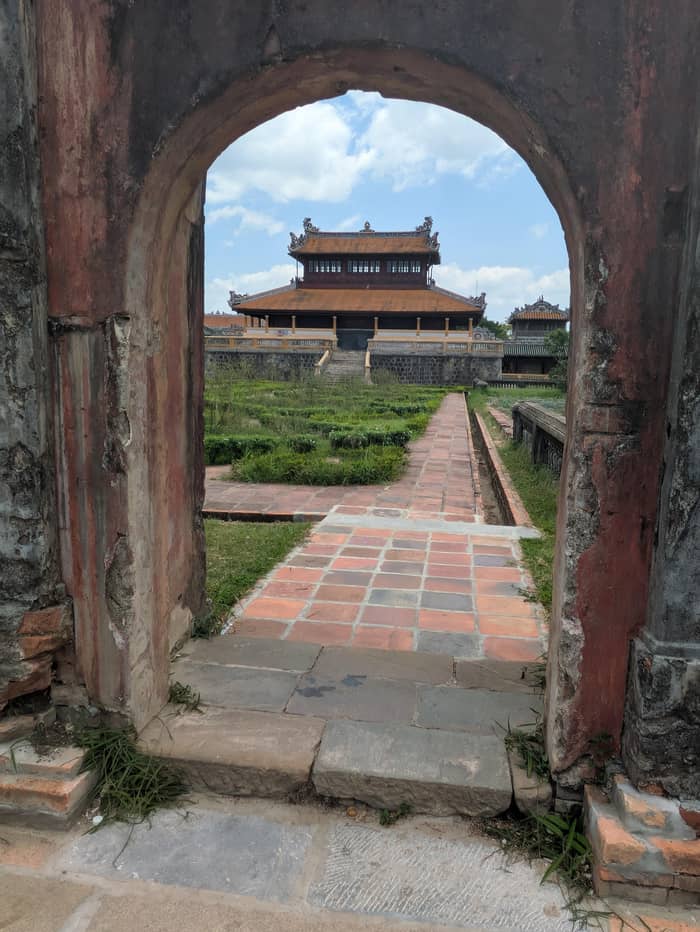
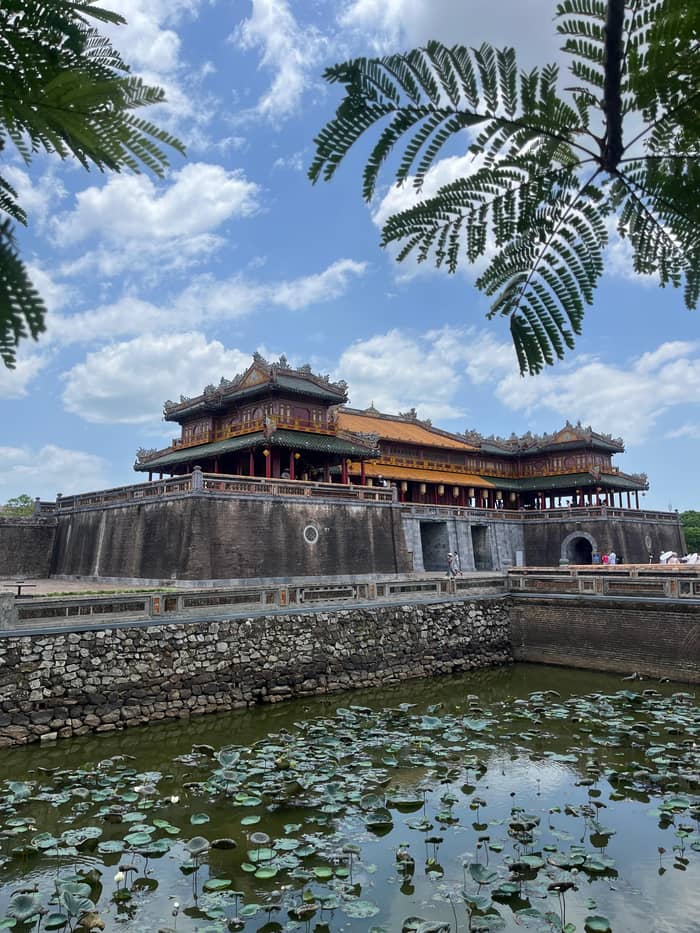
The Ngo Mon (Meridian) gate leads over a bridge to the great courtyard in front of the first palace.
Google MapsThai Hoa Palace was built in 1805 and moved in 1833 and hosted the coronations of 13 Nguyen emperors.
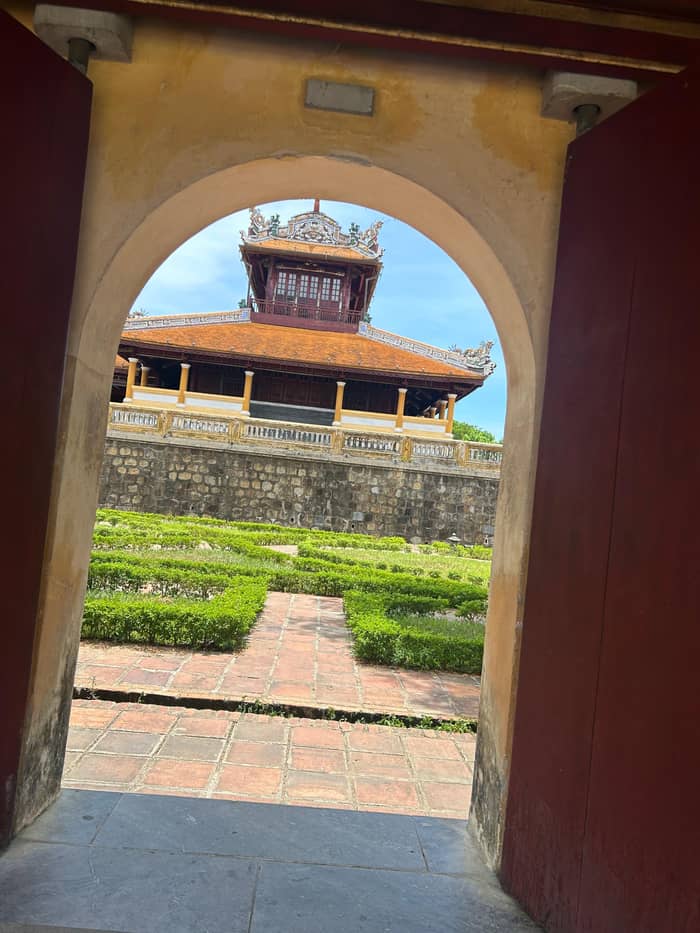
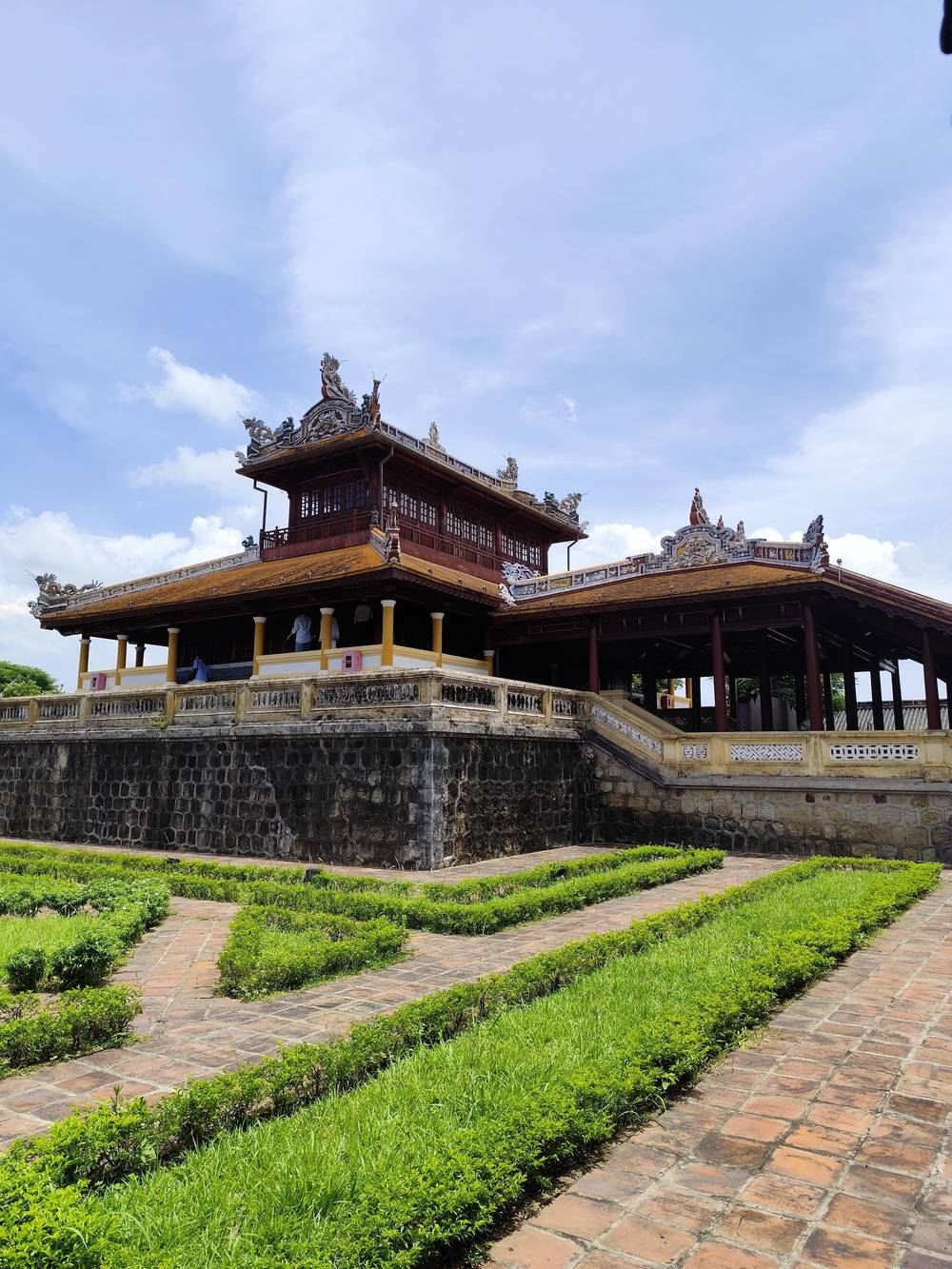
Google MapsHien Lam Pavilion is a 10-minute stop on the guided walking tour of the Imperial City.
Google MapsThe To Temple is one of 4 main ancestral temples, and the Cao Dinh urn stands in its courtyard.
Google MapsDien Tho Palace was one of two palaces for the Empresses and Empress Dowagers, in the west of the Forbidden Purple City.
Google MapsThe Forbidden Purple City is the inner court, on the central axis north of the Courtyard.
Google MapsDuyet Thi Duong theater is a 10-minute stop on the guided walking tour of the Imperial City.
Google Maps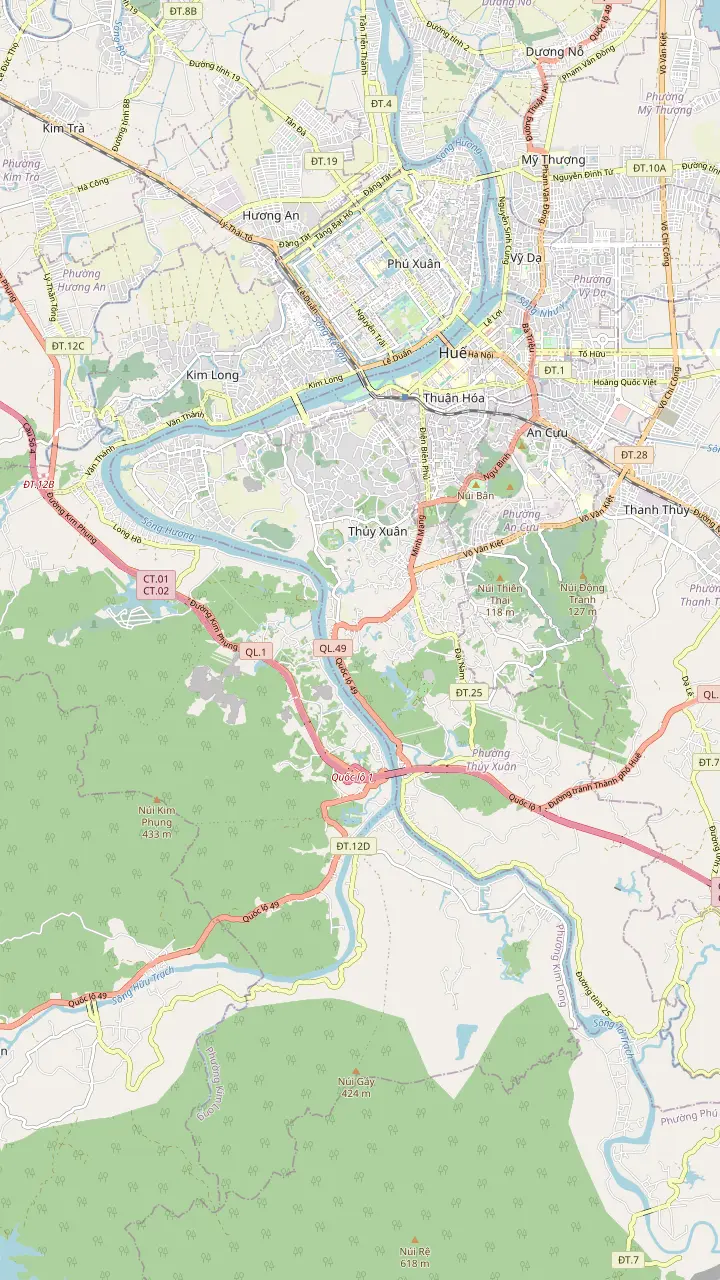
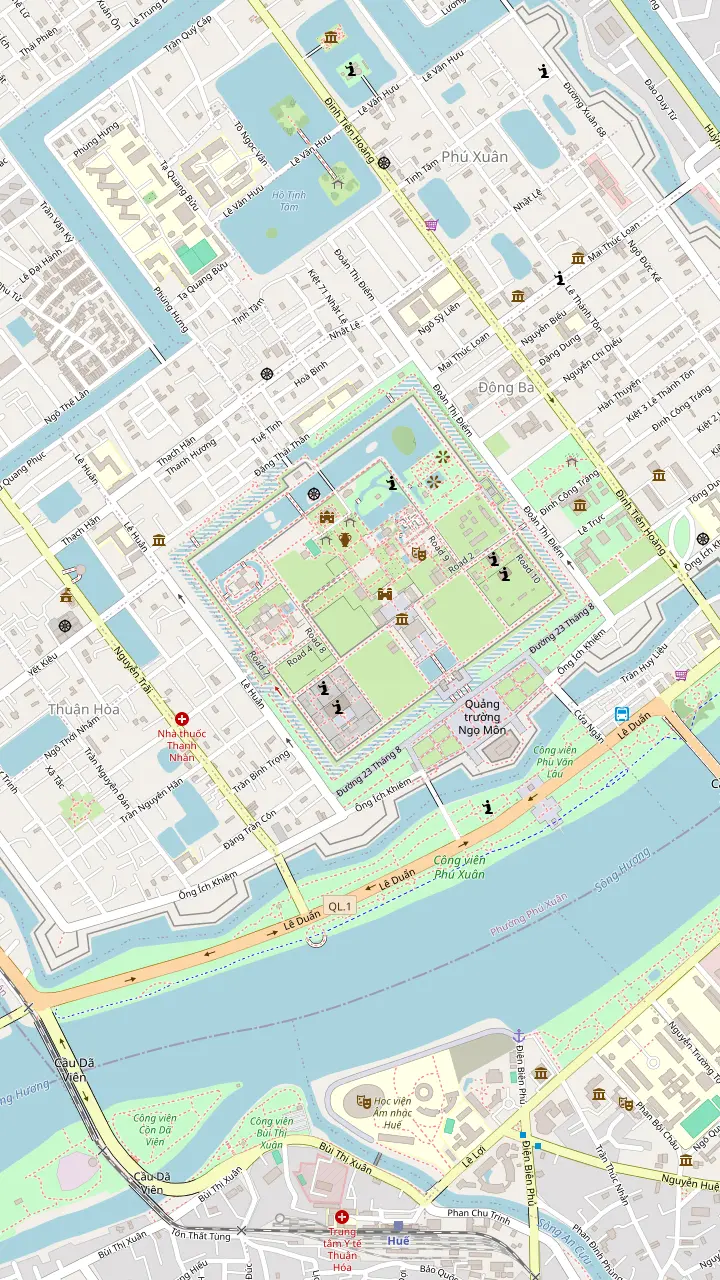
The Imperial City and Forbidden Purple City cover about 36 hectares.
Google MapsToa Kham wharf is where the night dragon boat cruises start, and the electric boat night tour also leaves from it.
Google MapsThe Phuoc Duyen tower marks Thien Mu pagoda, which stands on the bank of the Huong river.
Google MapsTu Duc tomb is reached by a brick-tiled walkway from Vu Khiem Gate to Khiem Cung Gate.
Google MapsThe Dong Khanh tomb is the first example of blended styles among the Hue tombs.
Google MapsThe Thieu Tri tomb is the only dynastic tomb not enclosed by a wall.
Google MapsThe Khai Dinh tomb climbs a pine-covered hill in platforms.
Google MapsThe Minh Mang tomb lies 12 km from Hue city and covers 18 hectares.
Google MapsThe Gia Long tomb lies 16 km from the city and was completed in 1820.
Google MapsThe Duc Duc tomb lies within the city limits.
Google Maps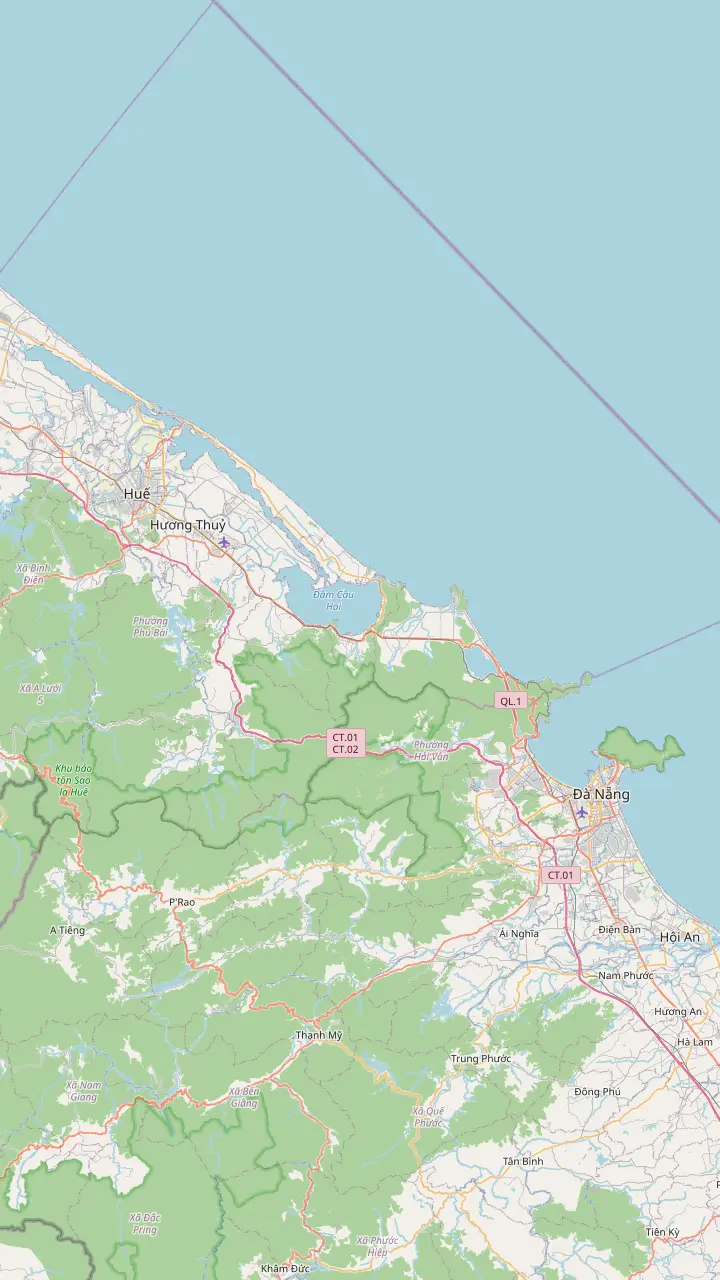
Da Nang Railway Station is where the train leg of the home day trip begins, after a 15-minute van ride from the pickup.
Google MapsHai Van Quan gate crowns the Hai Van Pass road that links Da Nang with Hue.
Google MapsLang Co Beach is a 10-minute photo stop on the home day trip, between the train and the van to Hue.
Google MapsHue Railway Station stands at 02 Bui Thi Xuan Street in the city center.
Google MapsThe Imperial City and Forbidden Purple City cover about 36 hectares.
Google Maps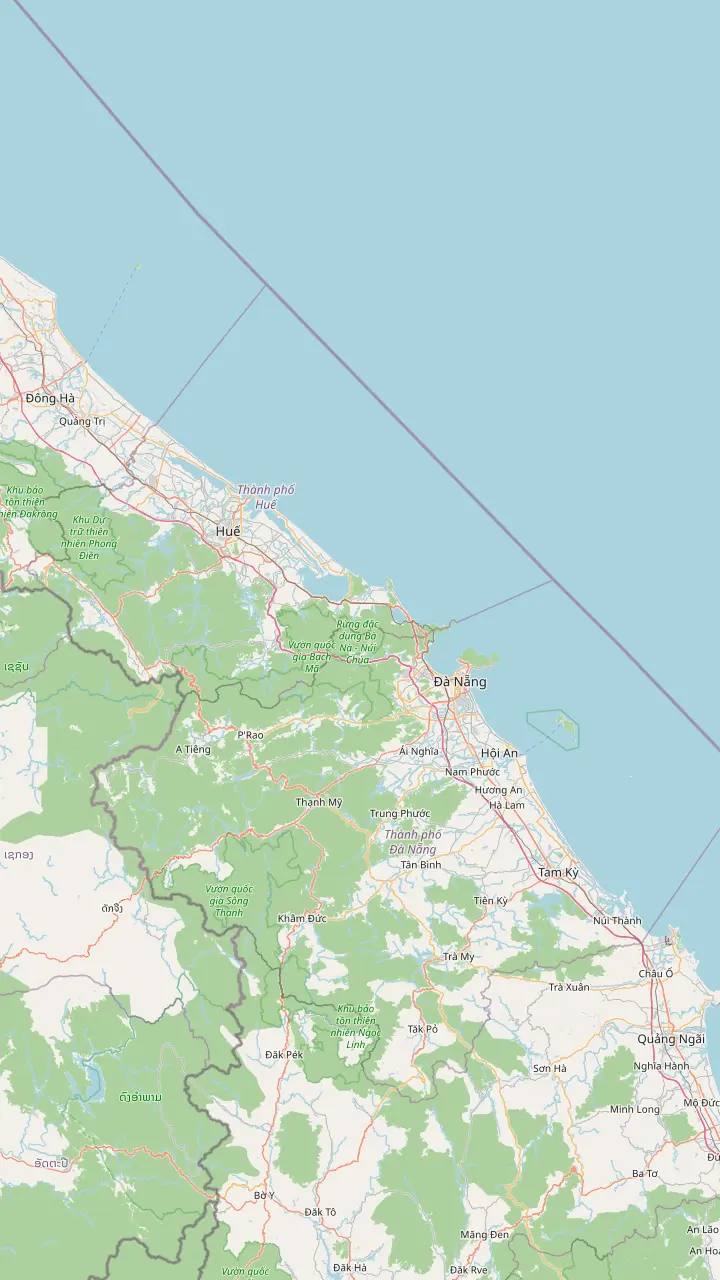
Hoi An Old Town is the start of the longer road day to Hue.
Google MapsDa Nang Railway Station is where the train leg of the home day trip begins, after a 15-minute van ride from the pickup.
Google MapsHai Van Quan gate crowns the Hai Van Pass road that links Da Nang with Hue.
Google MapsLang Co Beach is a 10-minute photo stop on the home day trip, between the train and the van to Hue.
Google MapsPhu Bai Airport lies about 15 km from Hue city.
Google MapsThe Imperial City and Forbidden Purple City cover about 36 hectares.
Google MapsMap data by © OpenStreetMap contributors
The halls, courtyards and gardens in the order a visit actually runs, from the Ngo Mon gate to the theater, with the minutes a guided walk gives each stop and a map of the whole complex.
Editorial team, hueimperialcitytour.click · Updated November 16, 2026 · A 9 min read
Basics
Start with the map in your head, because the Hue Imperial City is a series of rooms rather than a single building. The city tourism portal describes 3 areas inside the Hue Imperial Citadel, which it labels Citadel, Imperial City and Purple Forbidden City.5 The part you walk through on a ticket is the Imperial City together with the Forbidden Purple City, and the same portal gives their combined land area as about 36 hectares.2 That is large enough to lose an hour in a single courtyard.
The plan follows a logic that helps you navigate. The national tourism authority names Beijing's Forbidden City as the inspiration, and says the structures follow a cosmological scheme built on the five elements, the cardinal points and colours.6 In practice that means a straight central axis. The Courtyard runs on that axis from the Noon Gate to Thai Hoa Palace and was the place where royal ceremonies were held, and the Inner Court, the Forbidden Purple City, lies north of it.7,8
Everything else hangs off that axis. The portal lists 4 main ancestral temples on both sides of the Courtyard plus the isolated Phung Tien Temple, the Dien Tho and Truong Sanh palaces for the empresses and empress dowagers in the west of the Forbidden Purple City, and the Imperial Treasury in the east.9,10,11 Gardens fill the north. Once you know the axis, a hue citadel tour or a self-guided walk stops being a maze and becomes a straight line with side trips.
The zones side by side
| Area | Position | Role |
|---|---|---|
| The Courtyard | Central axis, Noon Gate to Thai Hoa Palace7 | Royal ceremonies7 |
| Inner Court | North of the Courtyard8 | The Forbidden Purple City8 |
| Ancestral temples | Both sides of the Courtyard9 | Trieu To, Thai To, Hung To and The To temples9 |
| Empresses' palaces | West of the inner court10 | Dien Tho and Truong Sanh palaces10 |
| Imperial Treasury | East of the inner court11 | The Imperial Household Department11 |
| Imperial gardens | North and northeast18 | Co Ha and Hau Ho gardens18 |
Zones as the Hue city portal's article on the complex describes them.2
Your walk begins at Ngo Mon, the Meridian gate. An account by a French visitor, republished by the city portal, describes passing the gate and crossing a brick bridge over a half-dried moat to reach a large courtyard in front of the first palace.12 The bridge and moat are still the clearest sign that you are entering a place built to keep people out. A guided walking tour gives the gate itself 20 minutes, which is generous but sensible, since this is where the groups bunch up.
Thai Hoa Palace is the first great hall and the one most people photograph. According to the city portal, all 13 Nguyen emperors were crowned there; Gia Long had it built in 1805 and Minh Mang moved it to its present site in 1833.1 The old account describes a red-lacquered and gilded throne on a pedestal of 3 steps with 2 reclining tigers as footrests in front of it.13 The same text says that in the emperor's presence mandarins left their shoes outside and spoke in a low voice.14 A guided walk gives the hall 30 minutes.
Check what is open before you plan your time here. The city portal reports a restoration of Thai Hoa Palace that began in 2021 at a cost of 129 billion VND, and a local guide said visitors passing the scaffolding hoped the hall would soon reopen.15,16 The portal's account was written before the work finished, so ask at the gate about access when you arrive. The hall also holds the poetic inscriptions that UNESCO recognized under its regional Memory of the World Programme for Asia and the Pacific.17
Where the minutes go
Minutes per stop as one guided walking tour of the Imperial City lists them; your own pace on your own ticket will differ.
West of the central axis the order of the walk shifts from ceremony to memory. The ancestral temples are where the Nguyen court honored its emperors, and the portal counts 4 main temples named Trieu To, Thai To, Hung To and The To, which stand on both sides of the Courtyard.9 Of them, The To Temple matters most for the visitor, because the bronze urns stand in front of it. A guided walk allots the Hien Lam Pavilion nearby 10 minutes, so this is a quick stop rather than a long one.
The Nine Dynastic Urns reward a slow look. The city portal says they were cast in 1836 under Minh Mang, and that the dragon engraved on the Cao Dinh urn was placed in the courtyard of The To Temple in the Imperial City.21 Cao Dinh is the largest of the Nine Dynastic Urns and stands in front of The To Temple courtyard.22 Each urn carries its own engravings, so walk along the row rather than stopping at the biggest. The Vietnamese state recognized the urns as a National Treasure in 2013.23
Temple interiors have their own rules, so watch the signs at the door. A walking-tour record notes that The Mieu temple recently asks visitors to stay outside rather than go in, so expect to look from the doorway on some days. For temples in general, the national authority wants modest clothes, with shoes and hat taken off at the entrance.24 Carry a light scarf for the shoulders if you wear a sleeveless top, and a bag you can hold in one hand when shoes come off.
Pick your approach
Start with the time you have and how you like to learn.
If I want the whole story from a guide
Guided walk
A walking tour with a live guide runs about 2.5 hours across the main halls.
If I am coming from Da Nang for the day
Our train day
The home tour gives the citadel 2 hours inside a 12.5-hour day.
If I only have about 2 hours
The highlights
Around 2 hours covers the main halls on the authority's estimate.3
If I want to see the walls from the water
Electric boat
The pilot day tour takes about 90 minutes along the Ngu Ha River.19
If I prefer to visit in the evening
Evening programme
The portal lists an evening programme; the hours page has the times.20
Three ways to walk it
2 hours inside
Train, citadel and a tomb
2.5 hours
Gate to theater
2.5 hours
Tip-based guide
The inner court is where the emperor lived and the court worked out of public view. The portal places the Forbidden Purple City on the central axis north of the Courtyard.8 This is also where most of the restored halls are, so the walk here is slower than in the open courtyards. A guided walk gives Kien Trung Palace 20 minutes, Thai Binh Pavilion 10 minutes and the Thieu Phuong Garden 20 minutes, which tells you how the time divides inside the walls.
Dien Tho Palace is a residence for the empresses and empress dowagers, in the west of the Forbidden Purple City, and it matters for a different reason than the throne hall.10 The portal's article on the Phu De, the palaces of married princes and princesses, explains that these houses were miniature versions of the citadel with a wall partition standing for a mountain and a shallow tank standing for the Perfume River.40 Look for the same ideas, water and a screen wall, inside the imperial gardens.
Finish the inner court at the theater. Duyet Thi Duong Royal Theater is the last named stop on the guided route and gets 10 minutes. If you walk it alone, plan the exit as carefully as the entrance: the ticket you buy at the gate is valid for one entry on the day only, so a break for lunch outside means leaving the complex for good. Eat before you go in, carry water, and treat the theater as the natural place to end the walk and head back toward the gate.
Price the walls
Tell us who is travelling and each walk or day is priced for your party.
Compare 4 side by side
Tell us who is travelling and each walk or day is priced for your party.
≈
View≈
View≈
View≈
ViewAll amounts are from-prices on GetYourGuide, converted at the ECB reference rate. Exact prices are shown at booking.
A guided walk, stop by stop
Start
A guided walk spends 20 minutes at the gate and the bridge.
Throne hall
The throne hall gets 30 minutes on the same walk.
Pavilion
The pavilion near The To Temple gets 10 minutes.
Inner court
A palace in the Forbidden Purple City gets 20 minutes.
Garden
The garden and Thai Binh Pavilion share time inside the inner court.
Finish
The last stop gets 10 minutes before the drop-off.
The honest answer is about 2 hours for the highlights. The national tourism authority reckons on around 2 hours for the royal halls, offices and temples of the site.3 The home tour of this site gives the citadel 2 hours in a 12.5-hour day that starts in Da Nang. That is enough for the gate, the throne hall, the temples and a look at the inner court, if you move steadily and keep the photographs short.
A guided walk stretches that to 2.5 hours. The walking tour record describes roughly 2.5 hours underfoot on uneven stone, with little shade and few places to sit, and another walking tour lists a duration of 2.5 hours as well. Add the time you will spend at the ticket booth and the first photograph at the gate and you see why a visit that is planned for exactly 2 hours runs over. If you want to see the gardens and the theater unhurried, keep a full half day free.
A guide changes what you see rather than how long you stay. The tourism authority says you get more out of the Imperial City with one, and that a guide can be arranged at your hotel to meet you at the entrance.39 On cost, the city portal lists the adult entrance at VND 200,000 in its December 2023 update, so check what the booth charges today before you budget around that figure.4 A walking-tour record adds that the booth takes cash only.
Video
Life Less Usual on YouTube · The video only starts loading on your tap.
This is the place of Emperor’s presence. To show great respect to him, the mandarins and royal servants must leave their shoes outside and speak in a low voice.
Before you go in
Hue has a new way to see the walls from outside. The city portal reports a pilot electric boat tour that, for the first time, uses the Ngu Ha River inside the Hue Citadel, as part of a 5-year pilot that links 3 rivers.41 The idea is to show the old defensive waterway and the architecture from a new angle, and it suits a visit that you want to break up with something slow and seated, between two stretches of walking on hard stone.
The Imperial City also keeps an evening programme, which the page on opening hours covers in full, so treat it as a second visit rather than an extension of your daytime walk. For just a flavor of the evening mood, the open ground in front of the gate does the job without a ticket. The tourism authority describes kite flyers there late in the afternoon and the Noon Gate lit up once dusk falls.42
Combine the walls with the rest of Hue in the same stay, not the same day. The royal tombs lie outside the city, and the page on the tombs compares them on fee and mood, while the history page explains who built what. A first visit that tries to add a tomb on top of a full walk of the walls usually feels rushed, and the home tour of this site shows the trade: 2 hours at the citadel and 45 minutes at one tomb.
How to visit Hue Imperial City is mostly a matter of the approach: it sits in the middle of the city, so you can reach it on foot from most central hotels. If you come from afar, Hue lies about 700 km south of Hanoi, and Hue Railway Station stands at 02 Bui Thi Xuan Street in the city center.43,37 From Da Nang, the home tour of this site covers 75 minutes by van after the train and a lunch break of 35 minutes before the citadel. Phu Bai Airport lies about 15 km from the city.36
Dress for walking and for temples at the same time. The walking tour record recommends comfortable shoes and sun cover, and the national authority wants modest dress in temples, with shoes and hat taken off at the door.24 A light shawl handles both, and slip-on shoes save time at every threshold. In wet months, pack a poncho rather than an umbrella for crowded stone paths; a walking-tour record gives the same tip.
Season matters more than the hour of the day. Best for the Imperial City, says the national authority, is February to April; the risky months for typhoons and heavy rain are September to November.44 The page on opening hours goes through the seasons and the weather month by month, and the history page covers the dates behind the halls. Read them the evening before, and the walk through the gate becomes much easier to follow.
FAQ
The tourism authority puts the royal halls and religious buildings at around 2 hours, and a guided walk runs about 2.5 hours.3
A restoration that began in 2021 is reported on the city portal, so ask whether the hall is open on your day.15
It stands in front of The To Temple courtyard among the Nine Dynastic Urns.22
The city portal lists VND 40,000 for a child, and the list was updated in December 2023.4
It says you get more out of your time here with a guide, who can be arranged at the hotel to meet you at the entrance.39
Sources
Planning a day in the Hue Imperial City? Ask a real person here.